

The Red Sea
New name for the markets


Good Morning & Happy Friday! U.S. stocks fell sharply again as a deepening tech sell-off showed no signs of easing, with investors on edge ahead of Amazon’s earnings and after Alphabet detailed a massive increase in AI spending. The S&P 500, Nasdaq, and Dow all dropped more than 1%, dragged down by concerns that heavy AI investment and disruption are pressuring established software companies. Adding to the gloom, new data pointed to a weakening labor market, reinforcing worries about the broader economic outlook.
From brutal losses ripping through crypto and global markets to a deeper look at how AI agents are reshaping trust online, today’s BIR connects the dots between volatility today and infrastructure tomorrow. We unpack what the market panic says about risk appetite and why blockchain may become essential as AI starts acting on our behalf.

Crypto News You Can’t Miss: Downward Spiral
We have to mention the carnage hitting the crypto market. Bitcoin plunged more than 10% in 24 hours, falling to around $63,000 and marking its steepest one-day drop since the FTX collapse in November 2022. The selloff spread well beyond crypto: silver crashed about 15%, gold slid over 2%, software stocks fell sharply, and major U.S. equity indexes ended lower.
Analysts say thin liquidity is amplifying the decline, triggering waves of liquidations. There’s still no clear sign of a bottom, with the $58,000–$60,000 range flagged as a key support level for bitcoin. Altcoins were hit even harder, with XRP dropping nearly 20% amid a lack of strong technical support. Commentary is now splitting sharply, with some calling this a full-blown capitulation phase that could drag on as risk appetite evaporates across markets. Others argue the move reflects panic rather than fundamentals, saying long-term adoption and institutional interest remain intact once volatility settles.
As one user pointed out, the fall seems to be everywhere except your wife’s closet.

When AI Can Pretend to Be Everyone, Who Do You Trust?
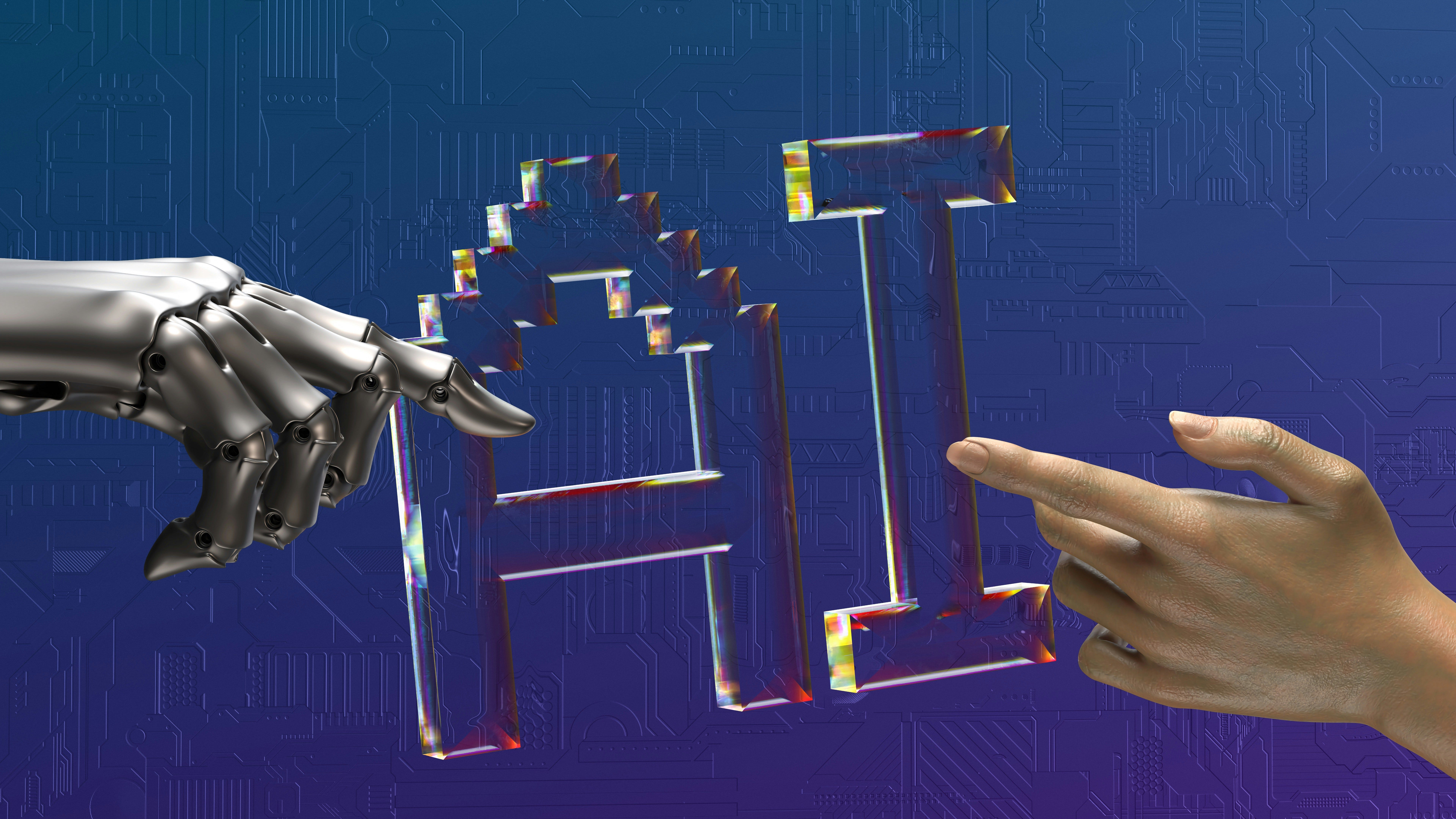
Yesterday the BIR featured a piece on Open Claw and how artificial intelligence is entering everyday life. Rather than being confined to a website or a single application, AI is increasingly embedded in the background, acting through agents that can plan, execute, and coordinate tasks on behalf of humans. This evolution marks an important step toward what many describe as an AI-native internet, one in which machines do not merely respond to prompts but actively participate in economic and social activity. Today we look at the question that naturally follows - whether the underlying digital infrastructure is prepared to support it safely and credibly.
The VC firm, Andreessen Horowitz, released a research piece earlier this week where they look at some of the key chellenges that the grown in AI creates and why crypto is more connected that you might think. As AI agents proliferate, the central challenge is no longer raw intelligence, but trust. The modern internet was built around the assumption that most participants are human, operating at human speed and scale. AI systems break that assumption. They can generate text, voices, images, and entire online personas at near-zero marginal cost. When combined with agent frameworks such as Open Claw, this capability allows a single actor to simulate thousands of “participants” in markets, forums, or transactions. Without structural safeguards, the result is an erosion of confidence in digital interaction itself.
The first contribution of blockchain, as highlighted by a16z, is restoring scarcity to identity. AI can produce unlimited content, but it cannot easily produce unique human existence. Blockchain-based proof-of-personhood systems aim to make it simple for one human to prove that they are a real individual, while making it prohibitively expensive to pretend to be many. This distinction is subtle but critical. The goal is not to eliminate AI from the internet, but to ensure that being human carries a verifiable signal. In a world of agentic systems, this signal becomes foundational. Without it, agents operating at machine scale can overwhelm systems designed for human participation.
Closely related is the question of who controls identity. Traditional digital identity systems are centralized. They rely on platforms, governments, or corporations to issue and revoke credentials. When AI agents act on behalf of humans, this concentration of control becomes more problematic. Whoever controls identity effectively controls access to participation. Decentralized identity, anchored on blockchain infrastructure, reverses this relationship. Individuals retain control over their credentials, choosing when and how to prove aspects of their identity. For non-technical audiences, this can be understood as the difference between carrying your own passport and having to ask a platform for permission every time you wish to cross a border.
The relevance to Open Claw and similar agent frameworks becomes clearer when considering portability. An AI agent is not tied to a single interface. It may operate through email, messaging applications, APIs, and web services simultaneously. Without a shared identity layer, there is no reliable way to know that the same agent is acting consistently across contexts, nor to define what it is allowed to do. Blockchain-based identity offers a universal reference point, enabling agents to carry permissions, roles, and authorizations across systems. This transforms agents from platform-specific tools into interoperable participants in a broader digital economy.
Economic activity is another area where existing infrastructure shows strain. AI agents, by design, operate at frequencies and scales that traditional payment systems cannot handle efficiently. Micropayments, high-frequency transactions, and automated revenue sharing are cumbersome or impossible within conventional financial rails. Blockchain systems, particularly those built for low-cost and programmable transactions, provide a solution that aligns naturally with agentic AI. An agent completing a task can trigger small payments to multiple contributors automatically, with rules enforced by code rather than intermediaries. For readers without a technical background, the key point is that blockchain allows value to move as easily and flexibly as information, which is essential when machines transact on our behalf.
Privacy forms the final and perhaps most misunderstood pillar of this argument. Many security systems attempt to protect users by collecting more data. Paradoxically, this approach supplies AI systems with exactly the information they need to impersonate humans convincingly. Blockchain systems combined with cryptographic techniques such as zero-knowledge proofs allow a different approach. Individuals can prove specific facts without revealing underlying personal data. In an AI-rich environment, privacy is not merely a personal preference; it is a defensive mechanism that limits what machines can learn and replicate.
Taken together, Open Claw illustrates how quickly AI agents are moving from novelty to infrastructure. The a16z framework explains why blockchain is not an ideological add-on to this transition, but a practical necessity. Agents expand what AI can do. Blockchain defines how trust, identity, value, and privacy are maintained when machines act at scale. For professionals and institutions navigating this transition, the implication is clear. The future internet will not be defined by AI alone, but by the interaction between intelligent agents and the systems that govern participation. Understanding both sides of that equation is no longer optional.
BIR Portfolio
Keep reading with a 7-day free trial
Subscribe to The Blockchain Income Report to keep reading this post and get 7 days of free access to the full post archives.